good stuff #1
If you're anything like me, then you save more articles than you actually read. My cloud tabs are packed full of things I want to buy, random life admin, short stories that have come across my radar, and ten million articles and book reviews I've saved to read later.
I know I could use some kind of fancy app to sort and store things to read, but I'm a creature of habit and comfort and laziness. And my brain operates 90% of the time in pure chaos. So this works for me.
I'm always interested in what books have just been released, especially New Zealand fiction. I live in Wellington, which is a very literary city, so I get to go to book launches and book events all the time. I'm very lucky! My love of New Zealand literature has definitely grown while I've been living here.
Because I keep an eye on bookish articles (and occasionally even read them), I thought I'd start compiling some of the interesting releases and reviews I come across.
Here are a few good things that I have read lately.
Sherryl Jordan (the late, great, and beloved NZ children's author) has a new memoir
Descending Fire is the posthumous memoir by Sherryl Jordan, a successful author of children's and young adult novels both in New Zealand and internationally.
In this article, Claire Mabey talks about the author's life, which was far from idyllic. She battled chronic fatigue and occupational overuse syndrome, writing and re-writing drafts by hand. I can't imagine writing even one draft by hand, let alone editing by hand. Chronic fatigue, I can understand, and it's awful. I hate to think that one of my favourite young adult authors was struggling so much with her health, but grateful that she was able to produce the work she did.
Sheryl Jordan's books were a mainstay of my childhood. I still remember bits and pieces of Rocco and Juniper, but my all-time favourite is The Raging Quiet. It's a story about a young woman who moves to a small coastal village and befriends a local outcast, who turns out to be deaf. As their friendship evolves and they learn to communicate with each other, the villagers become suspicious of their hand gestures and start to think she's using witchcraft on him. There are parts of that book that are seared into my brain - the carriage ride at the start of the book, the fire in the little cottage, the sea and the rain and the sweetness of finally finding a friend at the end of the world. I must have re-read it at least a half dozen times, maybe more. I still have my copy somewhere, and once I find it, I'm definitely going to read it again.
 Claire Mabey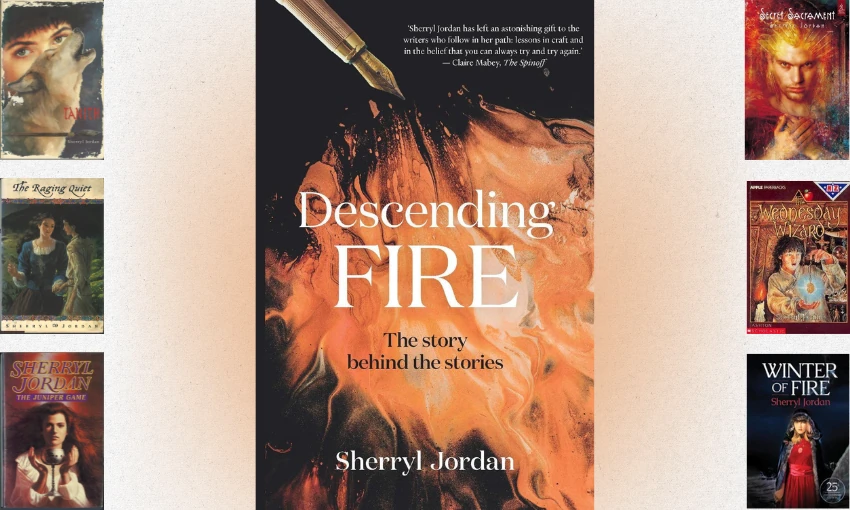
The Patea Boy with his second novel
Airana Ngarewa is having a dream publishing run. His first novel, The Bone Tree, was super successful, and people seemed to really like it. There were some mid reviews here and there (I remember ranting about one of them), but it was mostly well-received. I personally loved it and raved about it to anyone who would listen.
That's what makes this review so interesting - because Jordan Tricklebank, himself a bit of a New Zealand literary scene celebrity with his super popular Māori Literature Blog, has read The Bone Tree like I read The Bone Tree. Which is to say, suspending disbelief a little and just getting swept away. Because it's told from the POV of boys whose whole life is around their homestead, and ideas like 'city' and 'home' are just that. Ideas. They're not adults yet; home and not home are still things that are being formed.
I read The Bone Tree like it's a fantasy novel. The kid goes on a noble quest, the setting is dark and dangerous, the city is over there somewhere, and wolves are prowling the gates.
I spent some time in Taranaki when I was a little kid. I lived in New Plymouth when I was maybe about 6 or 7, and then later, as a teenager, I'd visit my Aunty in Waitara. So the hazy distinction between 'city' and 'the wops' feels appropriate to me.
His new novel is also very Taranaki. Love that for him.
 Jordan Tricklebank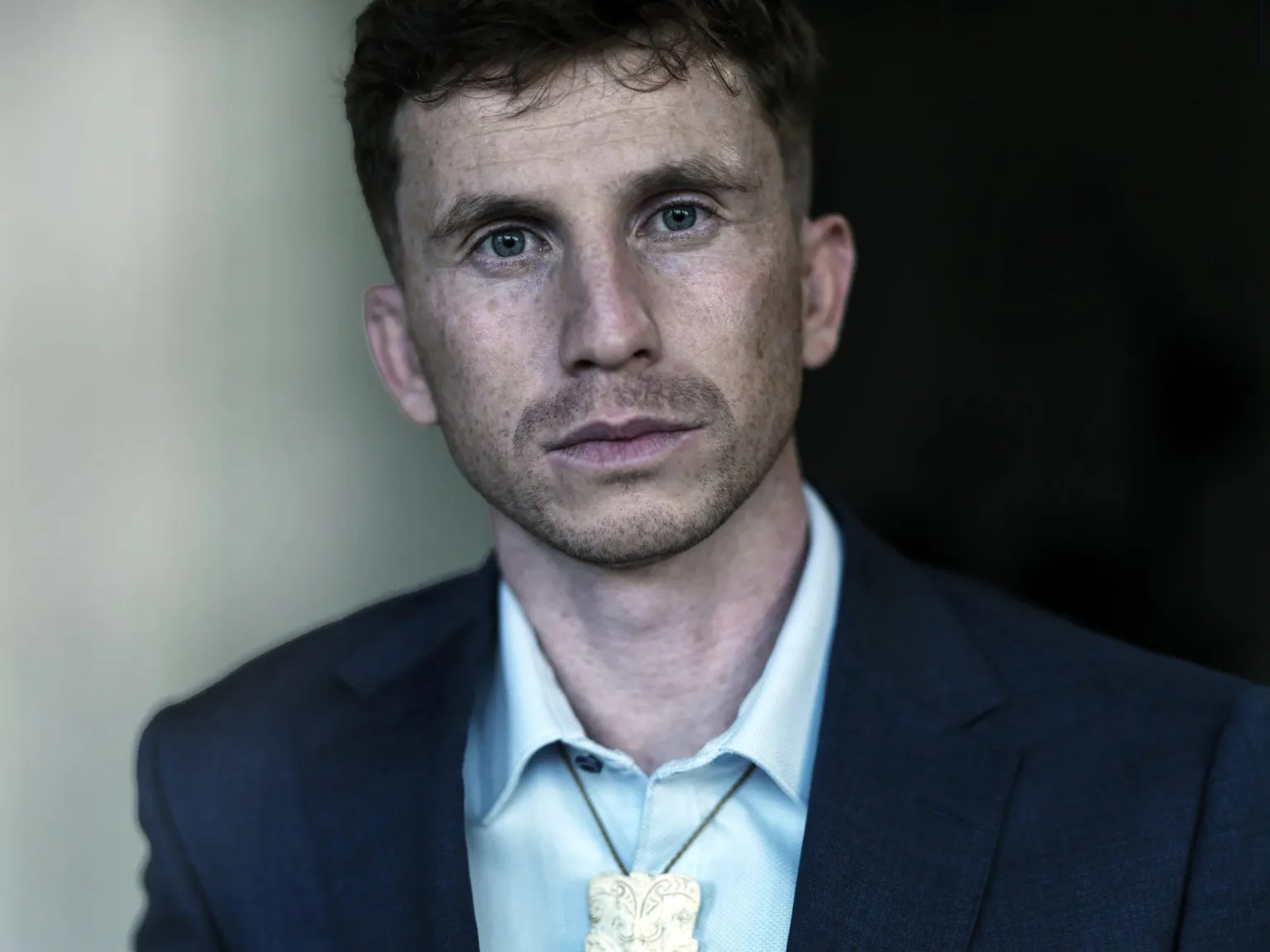
Horray for Landfall! Happy 250th issue to our oldest (?) literary journal
As I am writing this, my Mum is sitting at the kitchen table reading the latest issue of Landfall and going 'oohhh have you seen this yet'. I told her the lore about Landfall, that it's tradition for every New Zealand writer to get a rejection letter from them. I haven't got mine yet, so I need to get onto that.
The cool thing about this article is that Lynley Edmeades, the current editor of our most prestigious literary journal (and one of the few that is still published in print), interviews previous editors of the journal. So it feels like a walking museum tour through the history of Landfall.
The other cool thing is that the office of Māori Development at the University of Otago has just gifted Landfall with a te reo name: Tauraka. Tino rawe!
 Lynley Edmeades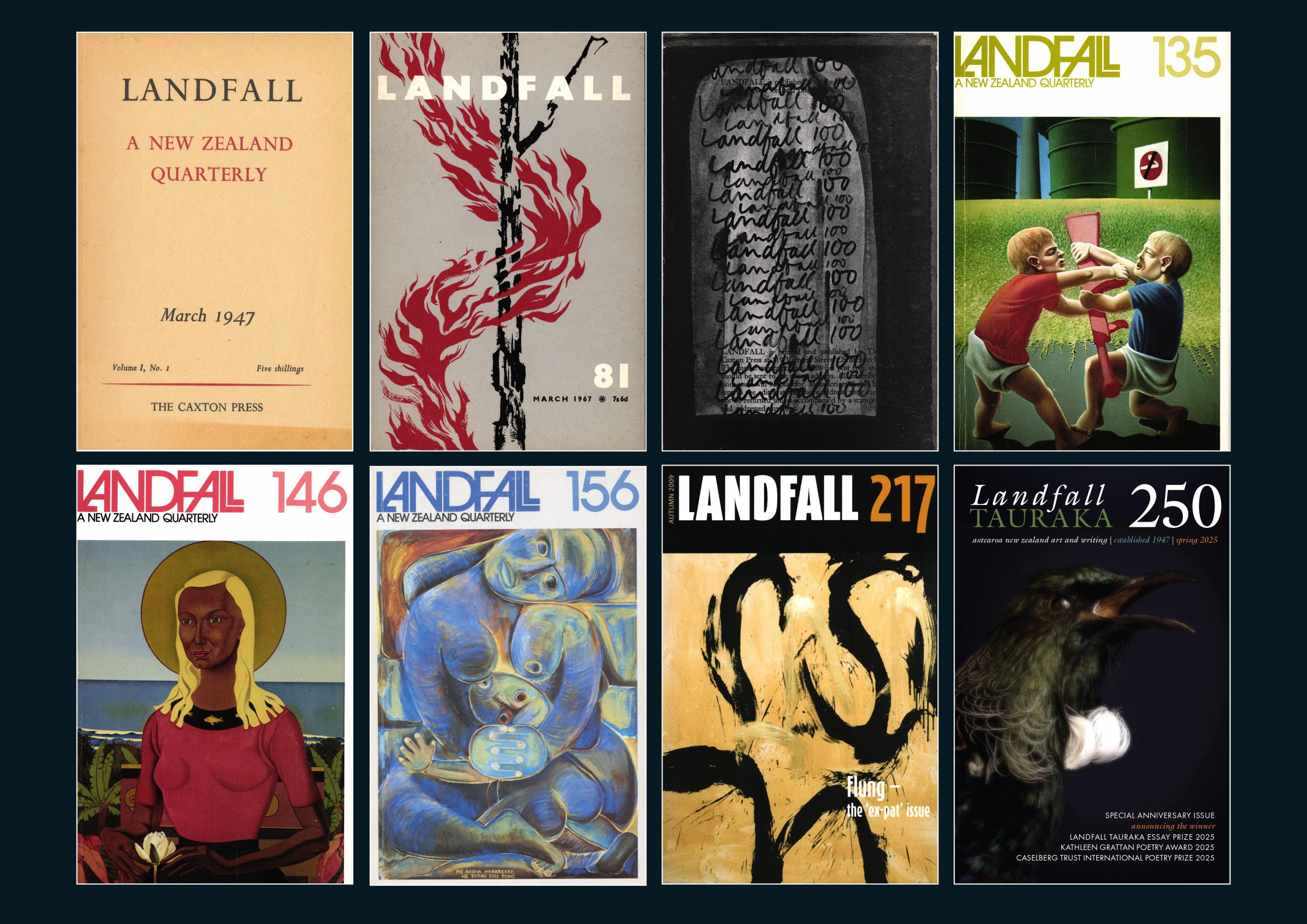
Forty years of The Bone People
If you only read one thing in this roundup, read this.
It's been forty years since Keri Hulme won the Booker Prize for The Bone People. How cool is that?
Arguably, one of our greatest achievements on the world stage (and probably the one I'm most proud of as a Māori writer) was when Keri Hulme took out the biggest prize in publishing. The Booker.
This article delves into some of the magic of that night and how disruptive it must have been for a book from the middle of nowhere to be suddenly thrust into the spotlight. Keri wasn't at the awards ceremony, but was able to take a phone call and couldn't believe she'd won.
That now iconic win, and her novel and broader work, has inspired the next generation or so of Māori authors.
One thing I want to do is read more of her poetry, on the recommendation of the lovely Robert Sullivan (who is also our new poet laureate, yay!).
 Claire Mabey
Jenny Han, the writer and executive producer of my dreams
I think I might be Jenny Han's biggest fan? Or at least her biggest fan in New Zealand, maybe.
Not only was I obsessed with To All the Boys I've Loved Before (the movies and the books), but I also love the spin-off show XO, Kitty, and I've just spent two solid months binge-reading and binge-watching The Summer I Turned Pretty. I'm a millennial, and I'm not afraid to say that the love triangle in this show turned me feral.
So, let me count the ways in which I love her. She's a young adult author (dream!). She writes about Asian American main characters and families (diverse representation, yes!). And she's a successful screenwriter and executive producer (two hit shows and three popular movies?!!! with another on the way??? ).
There are lots of great insights in here for aspiring authors, including that she often doesn't write in order.
I don’t write in order when I’m writing a novel. I just write whatever I feel compelled to write that day, whatever I’m excited to write about. I call it “dessert first.”
I love this, because it took me a very painful year to realise I didn't have to write in order, and that it felt so much better to just write whatever and wherever I felt like it for that day, or week, or month. The point is just to write. You can figure out the 'connective tissue', as she calls it, later.
She also talks about how, when writing a novel, compared to a screenplay, you're the whole crew.
When you’re writing a novel, it is a solitary process. It’s just you and the page. So you decide everything, and you are the director, the producer, the production designer, the costume designer. You’re the person who creates the whole world on your own, so that’s very different.
This is one of the things that is both terrifying and liberating when writing a book. You literally just make stuff up. Out of the blue, you could put a whole new governance system in the world you're building. Or decide that the setting doesn't work, so suddenly, you're writing a science fiction novel. Not that this has happened to me personally...
One of my dreams, apart from writing books and having actual people read them, is to write books that then get brought to life through TV. I'm a massive TV stan. And movie stan. Probably more movies than TV, but I do spend an inordinate amount of time on the couch consuming TV shows. I like to think it's research for character development and dialogue and pacing and relationship building, so it's thinking about story and writing while also relaxing. But to work on a show based on a book that I wrote? I need to manifest that. Basically, I want to be like Jenny Han when I grow up.
 Erica Gonzales
That's all the good things I've read online this week. I'll be back in a few weeks with more good stuff.
Byeeeeee!
Member discussion